


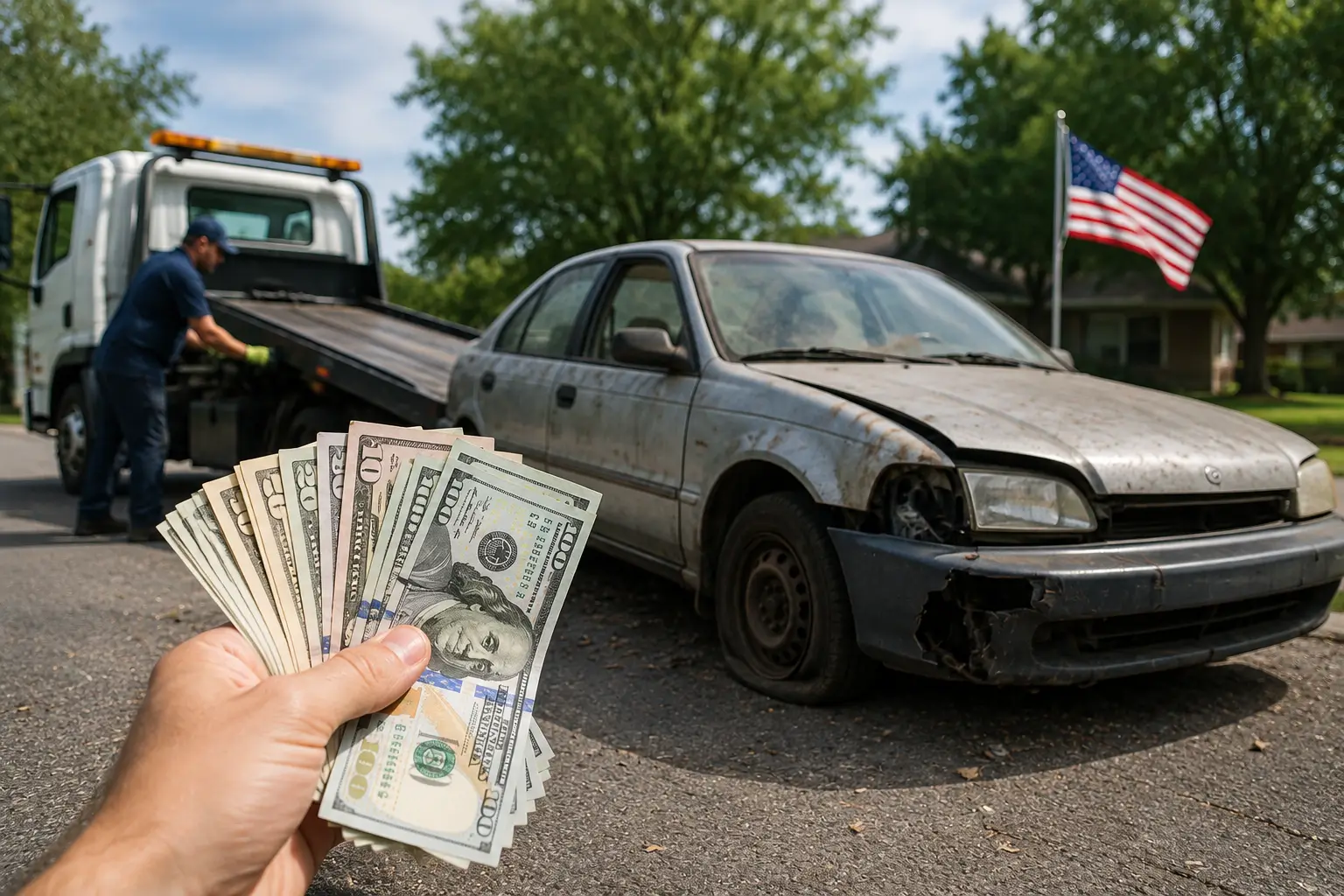
Do you have an old car sitting in your driveway, garage, or backyard that you no longer use? Maybe it doesn’t run anymore, costs too much to repair, or has been damaged in an accident. Instead of letting it take up space, you can turn it into cash.
Many people think a junk car has no value. That is not true. Even a broken car still has worth for its metal, useful parts, or recyclable materials. Thousands of people across the United States sell their unwanted cars every day to junk car buyers, salvage yards, and recycling companies.
What Is Considered a Junk Car?
People often think a junk car has no value. That is not true. Even a broken car still holds worth for its metal, useful parts, or recyclable materials. Across the United States, thousands of people sell unwanted vehicles every day to junk car buyers, salvage yards, and recycling companies. Generally, a vehicle is considered junk if it is no longer practical or economical to drive. It may have serious mechanical problems, accident damage, flood damage, or simply be too old to justify expensive repairs.
A car may be considered junk if it:
- Has major engine or transmission failure
- Has been declared a total loss after an accident
- Has severe rust or frame damage
- Has been sitting unused for years
- Costs more to repair than it’s worth
Even in these situations, the vehicle can still have value.
Why Selling a Junk Car Makes Sense
Leaving an old car in your yard seems harmless, but it actually costs you money. You still pay for insurance, registration, or parking. Sometimes, local laws even force you to tow away old cars.
Selling your junk car offers several benefits:
- You free up valuable space around your home.
- You receive cash instead of letting the car lose more value.
- Recycling helps reduce waste and supports environmental sustainability.
- Usable parts can be reused in other vehicles.
For many homeowners, selling a junk car is a practical way to simplify life while earning extra money.
What Determines the Value of a Junk Car?
No two junk cars are worth exactly the same amount. Buyers usually consider several factors before making an offer.
1. Vehicle Make and Model
Some brands have higher demand because replacement parts are easier to sell. Popular models often receive better offers than rare vehicles with limited parts demand.
2. Vehicle Condition
Some car brands have higher demand because their replacement parts sell faster. Popular models usually get better cash offers than rare cars with hard-to-find parts.
3. Weight and Scrap Metal Prices
Many junk vehicles are purchased for recycling. Since steel, aluminum, and other metals have market value, current scrap prices influence how much buyers are willing to pay.
4. Age of the Vehicle
Older cars are not automatically worthless. Some older vehicles contain valuable engines, transmissions, wheels, or body panels that buyers can resell.
Documents You May Need Before Selling
Requirements vary by state, but most buyers ask for a few basic documents before completing the purchase.
These commonly include:
- Vehicle title
- Government-issued photo ID
- Registration
- Keys, if you still have them
Some states allow sales under specific conditions, while others require you to get a replacement title first. Checking your state rules before you contact buyers saves time.
How to Get the Best Price for Your Junk Car
Many people accept the first offer they receive. That can sometimes cost them hundreds of dollars.
Instead, take a little time to compare your options.
- Request quotes from several buyers. Prices can vary depending on demand, location, and the buyer’s business model. Comparing offers gives you a better idea of your car’s market value.
- Describe your vehicle honestly. Tell the buyer the truth about the car’s mileage, whether it runs, whether it was in an accident, and whether any parts are missing. Genuine offers are produced when accurate information is provided.
- Remove personal belongings. Before handing over the vehicle, check the glove box, trunk, center console, and under the seats. It’s easy to overlook important documents or personal items.
- Ask about towing costs. Many junk car buyers include free towing. Confirm this before accepting an offer so you don’t lose part of your payment to transportation fees.
- Know the payment method. Reputable buyers clearly explain whether you’ll receive cash, a check, or an electronic payment when the vehicle is picked up.
Taking these simple steps often helps sellers receive a better overall deal.
Should You Repair Your Junk Car Before Selling?
This is one of the most common questions people ask, and in many cases, the answer is no.
If your vehicle needs major repairs, spending more money usually will not increase its selling price enough to cover your costs.
- Keep it simple: Basic tasks like cleaning out trash, wiping down the inside, or pumping up a flat tire can make a better first impression.
- Skip major fixes: Putting in a new engine or transmission is rarely worth it for a junk car.
Focus on selling the car just as it is, unless a tiny, cheap fix will actually boost its value.
Where Can You Sell a Junk Car?
There are several options available across the United States.
a) Local Junk Car Buyers
Many local businesses buy cars straight from people. They usually give fast price offers and pick up the car in a day or two.
b) Salvage Yards
Salvage yards buy vehicles mainly for reusable parts and scrap metal. Depending on your vehicle’s condition, this can be a good option.
c) Auto Recycling Companies
Recycling centers take cars apart and save the valuable parts. This helps the environment and lets you make money from a car you no longer want.
d) Private Buyers
Some individuals purchase damaged vehicles for restoration or parts. Selling privately may sometimes produce a higher price, although it usually requires more time and effort.
Common Mistakes to Avoid When Selling a Junk Car
Selling an old car is usually easy, but a few mistakes can cost you money or cause trouble.
Avoid these common errors:
- Taking the first offer without comparing prices from other buyers.
- Leaving personal items inside the car by accident.
- Not transferring ownership correctly to the new buyer.
- Ignoring your state’s rules about vehicle titles.
- Paying for towing when many companies offer free pickup.
A little preparation helps the sale go much smoother.
Conclusion
Selling a junk car is pretty easy. Even if your car is totally wrecked, won’t start, or is just too old to drive, it is still worth cash. You can turn that old clunker into money with no hassle just by knowing what it is worth, getting your paperwork ready, comparing a few quotes, and picking a trusted buyer.
