


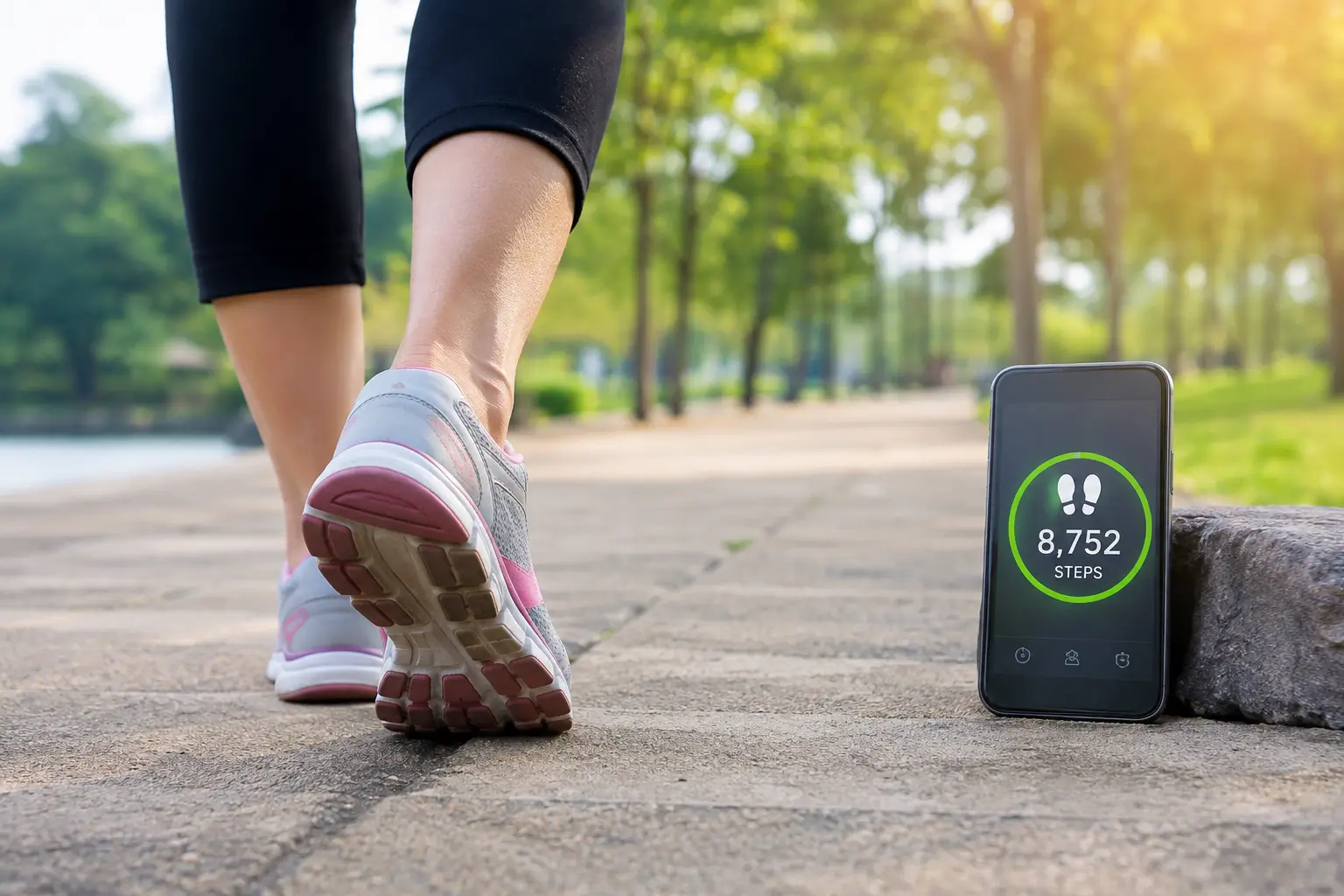
If you have ever looked at your phone at the end of the day and thought, “I barely moved today,” you are not alone. Modern life makes it surprisingly easy to spend most of the day sitting. You drive to work, sit at a desk, drive home, sit for dinner, and then relax on the couch. That is where walking can make a real difference.
But how much should you actually walk?
You have probably heard the famous 10,000 steps a day goal. It sounds simple, but it can also feel unrealistic if you currently take 3,000 or 4,000 steps. The good news is that you do not need to hit 10,000 steps every day to benefit from walking. Current evidence suggests that health benefits can appear at lower step counts, and your ideal target depends on your age, fitness level, health, and daily routine.
So instead of chasing an arbitrary number, it makes more sense to find a walking goal you can actually maintain.
How Many Steps Should You Walk a Day?
There is no single daily step number that works for everyone.
Most adults can aim for 7,000 to 10,000 steps a day. Recent research shows that major health benefits kick in right around 7,000 to 8,000 steps, while walking even more can offer extra perks depending on your fitness goals.
That does not mean someone walking 5,000 steps is doing poorly. In fact, increasing your movement from a very low starting point can be a meaningful improvement. Cleveland Clinic notes that there is no universal step target. Your goal should account for your fitness level, age, available time, and current activity. It also reports that many American adults average around 6,000 steps a day.
Your daily target should challenge you without making you dread your walk.
Is 10,000 Steps a Day Really Necessary?
The 10,000-step target became extremely popular through fitness trackers and pedometers, but it was not originally established as a universal medical requirement. Healthline notes that the number came from a Japanese pedometer marketing campaign in the 1960s.
That does not make 10,000 steps a bad goal. If you enjoy walking and can comfortably reach that number, there is nothing wrong with using it as a target. The problem comes when people treat 10,000 as a pass-or-fail test.
Imagine two people. One walks 4,500 steps every day after previously taking only 2,000. The other walks 10,000 steps but spends nearly the entire rest of the day sitting.
The first person has still made a major improvement in daily movement.
The greatest health benefits occur before you even reach 10,000 steps, according to research. In fact, according to significant research that Harvard Health highlighted, the true advantages begin at about 3,900 steps per day, and the more you walk, the better your general health gets.
So, yes, you can use 10,000 as a goal. Just do not assume your health depends on reaching that exact number.
What Are the Health Benefits of Walking Every Day?
Walking gives you a simple way to become more physically active without needing expensive equipment or a complicated workout plan. Walking on a regular basis can help control weight, enhance mood, and support heart health. Benefits like better sleep, enhanced physical function, and decreased risks for a number of chronic illnesses are also listed by the Mayo Clinic.
One reason walking works well for so many people is that you can fit it into normal life. You can walk around your neighborhood, take a stroll during lunch, walk your dog, use a treadmill, or simply spend more time on your feet during everyday activities. You also do not need to turn every walk into a workout.
A comfortable walk can help you become more active. A brisk walk can raise your breathing and heart rate enough to count toward moderate-intensity physical activity.
How Many Steps Do You Need for Weight Loss?
If your goal is weight loss, you may wonder whether you need 10,000 steps every day. There is no magic step number for weight loss. Weight loss depends on your overall calorie balance, eating habits, activity level, sleep, and other factors. Walking can increase the amount of energy you use during the day, which can support a weight-loss plan.
However, walking should not become a punishment for eating.
A practical strategy involves increasing your daily movement while making reasonable changes to your diet. For example, someone who normally takes 4,000 steps could gradually work toward 6,000 or 7,000 rather than suddenly forcing 10,000 steps into a busy schedule.
Cleveland Clinic notes that a 30-minute walk can provide a useful amount of movement and may help support healthy weight management. The important part is consistency. Walking 7,000 steps most days is much more useful than walking 12,000 steps once and then spending the next several days doing almost nothing.
How Many Steps Are Considered Active?
Step-count categories can give you a rough idea of where you stand, but they should not become strict labels.
Cleveland Clinic describes fewer than 5,000 daily steps as generally sedentary, around 5,000 to 7,499 as low active, 7,500 to 9,999 as somewhat active, and 10,000 or more as active.
Think of these numbers as reference points rather than medical rules. If your tracker says 4,800 steps today, that does not suddenly make you unhealthy. Likewise, 10,200 steps does not automatically make your diet, sleep, or other lifestyle habits healthy.
How Far Is 10,000 Steps?
For most people, 10,000 steps is about 5 miles. The exact distance depends on your height, stride length, speed, and where you walk. That is why hitting 10,000 steps can feel so hard. If you sit at a desk and only walk 3,000 steps a day, adding 7,000 more takes a lot of extra time.
You do not have to complete all those steps in one walk. You can accumulate steps throughout the day. A short morning walk, some movement during work breaks, walking while running errands, and an evening stroll can add up surprisingly quickly.
How to Get More Steps Without Spending Hours Exercising
The easiest way to increase your step count is to stop thinking of walking as something you can only do during a formal workout. Look for small opportunities throughout your normal day.
- Take short walking breaks: Taking short walks throughout your workday helps break up long hours of sitting. You don’t need to work out for a full hour at once—every bit of movement counts. The CDC suggests getting 150 minutes of moderate activity each week, which is easy to reach if you break it down into small daily steps.
- Make errands more active: You can move more by parking a bit further away from the store, making extra trips through the supermarket aisles, or using the stairs. Without requiring a formal workout, these small decisions add extra steps to your day.
- Create a regular walking habit: A 10- or 15-minute walk after breakfast, lunch, or dinner can become easier to maintain than promising yourself a long workout every day. You can also walk with a friend, family member, or dog to make the habit more enjoyable.
The trick is to make walking part of your lifestyle instead of treating it like another chore on your calendar.
Should You Walk Every Day?
For most people, regular walking can fit well into an active lifestyle. You do not necessarily need a hard workout every single day. Some days may involve a longer walk, while other days may simply include more movement around the house or workplace.
The bigger goal is to avoid spending the entire day sitting. That is important because a step count does not tell the whole story.
For example, your fitness tracker may show 8,000 steps, but those steps could come from slow movement around the house. Another person might take 6,000 steps that include a brisk 30-minute walk.
Both people are moving, but the intensity and overall exercise routine can differ.
How to Start Walking If You Are Very Inactive
If you currently take very few steps, do not jump straight into a 10,000-step target. Your muscles, feet, joints, and cardiovascular system need time to adjust to increased activity. Start with a realistic amount. You might take a five- or 10-minute walk once or twice a day. Once that becomes comfortable, increase either the duration or your daily steps.
Harvard Health has recommended tracking your current steps for a few days and then gradually increasing your daily total rather than making a huge jump immediately.
This approach also makes your goal feel less intimidating. If your phone shows 3,500 steps at the end of the day, you do not have to think, “I failed to reach 10,000.” Instead, think, “How can I add another 500 steps today?”
That small change in mindset can make walking much easier to maintain.
Does Walking Speed Matter?
Yes, especially when you are trying to meet exercise guidelines. The CDC defines moderate-intensity activity based on how hard your body works, not simply on how many steps your tracker records. Brisk walking can count as moderate-intensity aerobic activity for many adults.
A simple way to think about it is this: a relaxed stroll and a brisk walk may produce similar step counts, but they do not necessarily provide the same exercise stimulus.
You do not need to walk fast all the time. If you are new to exercise, start comfortably. As your fitness improves, you can add periods of faster walking.
What Is a Good Daily Walking Goal for You?
Instead of copying someone else’s step goal, start with your own baseline. Wear your phone or fitness tracker normally for several days and look at your average. Then choose a target that represents a reasonable increase.
If you average 3,500 steps, 5,000 may be a good first milestone. If you already average 7,000, you may choose 8,000 or 9,000.
If you comfortably walk 10,000 steps every day, you can focus less on the number and more on other parts of fitness, such as brisk walking, strength training, mobility, or balance. The CDC advises those 65 and older to engage in at least 150 minutes of moderate-intensity exercise each week in addition to balancing and muscle-strengthening exercises.
And if you have a chronic health condition, disability, or another concern that affects exercise, talk with a healthcare professional about the right amount and intensity for you. The CDC specifically recommends discussing activity choices with a healthcare professional when needed.
Summary
For many adults, working toward 7,000 to 10,000 steps a day can be a practical goal, but you do not need to treat 10,000 as a magic number. If you currently walk very little, start lower and build gradually. If you already walk a lot, focus on the quality and variety of your physical activity rather than simply chasing a bigger number.
Most of all, remember that your step counter is just a helper, not a grade. Walking for 20 minutes today is much better than sitting on the couch for another hour. Getting 5,000 steps is still great progress. An easy habit you keep for months is far better than a hard goal you give up after a week.
Walking doesn’t have to be complicated. Put on comfortable shoes, head outside when you can, and start with a goal that fits your daily life. Then build up slowly from there.
