


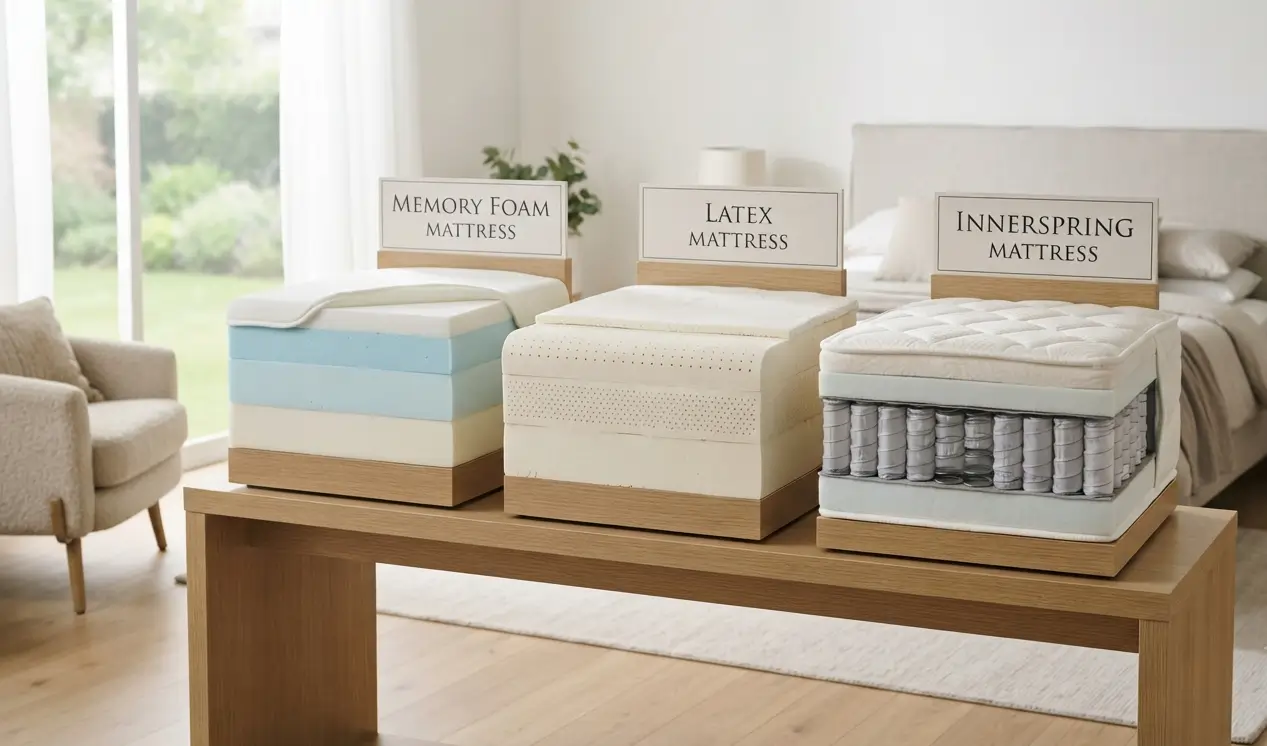
Choosing a mattress can be more confusing than it looks. Walk into a mattress shop, and you may hear terms such as memory foam, latex, pocket springs, high-density foam, and hybrid mattresses. Every mattress may feel different, and a mattress that feels comfortable to one person may not feel right to another.
Three common mattress materials are memory foam, latex, and innerspring. Each one has a different construction and gives a different sleeping experience. Memory foam usually gives a softer and more body-hugging feel. Latex generally feels more responsive and springy. Innerspring mattresses use metal coils to provide support and a more traditional mattress feel.
So which one should you choose?
There is no single answer for everyone. Your sleeping position, body weight, preferred firmness, room temperature, budget, and personal comfort all matter.
Memory Foam vs. Latex vs. Innerspring at a Glance
| Feature | Memory Foam | Latex | Innerspring |
| Main material | Foam | Latex foam | Metal coils with comfort layers |
| Feel | Body-contouring | Responsive and slightly bouncy | Springy and supportive |
| Motion transfer | Usually low | Moderate | Depends on coil design |
| Airflow | Usually lower | Generally better | Generally good |
| Pressure relief | Very good for many sleepers | Good | Depends on comfort layer |
| Edge support | Depends on construction | Depends on construction | Often good |
| Maintenance | Generally simple | Generally simple | Depends on design |
| Best known for | Contouring and pressure relief | Responsiveness and durability | Support and airflow |
These are general characteristics. The actual feel can change significantly depending on the mattress design, foam density, latex type, coil system, and firmness.
What Is a Memory Foam Mattress?
Memory foam is a type of foam that responds to body heat and pressure. When you lie on it, the material can soften around your body and create a contouring feeling. This is why many people describe memory foam as a mattress that seems to “hug” the body.
Memory foam mattresses can work well for people who like a softer, cushioned feeling. They can also reduce the amount of movement that travels across the mattress, which may help couples when one person moves during sleep.
However, memory foam does not suit everyone. Some people dislike the sinking or enclosed feeling. Memory foam can also retain more heat than some other mattress materials, although mattress design and newer foam constructions can change how warm a particular model feels.
1. Pros of Memory Foam
Memory foam can provide good pressure relief because it spreads body weight across a larger area. It can also reduce motion transfer. For couples, this can be useful when one person changes sleeping position or gets out of bed. Another advantage is its ability to contour around the body. People who enjoy a cushioning sensation may find this comfortable.
2. Cons of Memory Foam
The biggest concern for some sleepers is heat. Traditional memory foam can feel warmer because the material can restrict airflow compared with a coil-based mattress. Some people also find it difficult to move around on a very soft memory foam mattress because the body can sink into the material. The quality of memory foam also varies. A mattress with better construction may perform differently from a low-cost mattress that uses thinner or lower-quality foam.
What Is a Latex Mattress?
Latex mattresses use latex foam as a major comfort or support material. Latex can come from natural rubber or from synthetic materials. Some mattresses use a combination. Latex generally feels more responsive than memory foam. Instead of slowly moulding around your body, it tends to push back more quickly when you move. This makes latex a popular option for people who want pressure relief but do not like the deep sinking feeling associated with some memory foam mattresses.
1. Pros of Latex
Latex usually provides a responsive sleeping surface. If you change sleeping positions frequently, you may find it easier to move compared with a deeply contouring foam mattress. Latex can also offer good durability when manufacturers use quality materials and construction. Many latex mattresses also have a more open and responsive feel than traditional memory foam. The actual temperature performance still depends on the complete mattress design.
2. Cons of Latex
Latex mattresses can cost more than some basic foam or innerspring options. The feel can also be different from what people expect. If you prefer a very soft mattress that allows your body to sink deeply, a latex mattress may not provide the same experience as softer memory foam. Buyers should check the product specifications to understand what type of latex the mattress actually contains.
What Is an Innerspring Mattress?
Innerspring mattresses use metal coils as their main support system. Manufacturers place comfort materials such as foam, fabric, or other cushioning layers above the springs. Innerspring mattresses have been available for many years and remain a common choice. The spring system can give the mattress a more traditional bouncy feel. It can also allow airflow through the coil area. Not all innerspring mattresses feel the same. The type, number, and arrangement of coils and the materials above them can change the overall comfort and support.
1. Pros of Innerspring Mattresses
One major advantage of an innerspring mattress is airflow. The space around the coils can allow air to move through the mattress more easily than dense foam constructions. Many innerspring mattresses also provide a responsive feel. You may find it easier to change positions because the surface pushes back rather than allowing deep sinking. Innerspring mattresses also come in many firmness levels and designs, so buyers have several options.
2. Cons of Innerspring Mattresses
Basic innerspring mattresses may transfer more movement from one side of the bed to another. The springs can also produce noise over time in some mattresses, although the experience varies with construction and quality. Another issue involves pressure relief. A basic spring mattress with a thin comfort layer may not provide the same cushioning as a well-designed foam or latex mattress.
Memory Foam vs. Latex: What Is the Difference?
Memory foam and latex both use foam-based materials, but they feel quite different. Memory foam generally responds slowly to pressure and creates a more pronounced body contour.
Latex usually responds faster and gives more bounce. If you like the feeling of sinking slightly into the mattress, memory foam may feel more natural to you. If you prefer a mattress that lets you move easily across the surface, latex may feel better.
Latex vs. Innerspring: Which Feels Different?
Latex and innerspring mattresses both offer a responsive feel, but they achieve it differently. Latex provides its response through the elasticity of the foam. Innerspring mattresses get much of their bounce and support from metal coils.
A latex mattress can feel more uniform across its surface. An innerspring mattress can provide a more traditional spring-based feel. If you are unsure, try lying on both types for several minutes rather than judging them only by appearance.
Memory Foam vs. Innerspring
Memory foam and innerspring mattresses provide two very different experiences. Memory foam focuses more on contouring and pressure relief. Innerspring mattresses generally provide more bounce and airflow.
For couples, memory foam can offer an advantage when reducing movement across the mattress matters. Innerspring mattresses may allow more movement to travel through the spring system depending on the coil design. Modern mattresses can also combine both materials. These are often called hybrid mattresses.
What Is a Hybrid Mattress?
A hybrid mattress combines a coil support system with foam or other comfort materials. For example, a mattress may use pocketed coils underneath memory foam or latex. This design tries to combine the support and airflow characteristics of springs with the cushioning of foam. Hybrid mattresses can therefore be worth considering if you like some features of an innerspring mattress but also want more cushioning.
However, the word “hybrid” alone does not tell you whether a mattress will feel soft or firm. Always check the actual construction and firmness.
Which Mattress Is Better for Your Sleeping Position?
Your sleeping position can influence which mattress feels comfortable.
1. Side Sleepers
Side sleepers often look for pressure relief around areas such as the shoulders and hips. A mattress with suitable cushioning can help provide a more comfortable sleeping surface. Memory foam can provide this contouring feel, while latex and hybrid mattresses can also offer pressure relief depending on their firmness and design.
2. Back Sleepers
Back sleepers generally need a mattress that provides comfortable support while allowing the body to remain in a natural position. A medium or medium-firm feel may work for some people, but there is no universal firmness level for every back sleeper.
3. Stomach Sleepers
Stomach sleepers often need to pay attention to how deeply their body sinks into the mattress. A mattress that feels too soft may not feel comfortable for some stomach sleepers. The right choice depends on body type, sleeping habits, and personal comfort.
What Should You Check Before Buying?
Do not buy a mattress simply because a salesperson calls it “premium” or “orthopaedic.”
First, check the material and construction. Find out whether the mattress uses memory foam, latex, springs, or a combination.
Next, check the firmness. Remember that firmness ratings are not perfectly standardised across brands, so the same rating may feel different between two manufacturers.
Also check the warranty, trial period, mattress dimensions, and return conditions.
Try Before You Buy
If possible, lie on the mattress in your normal sleeping position. Do not simply sit on the edge for a few seconds and make a decision. Spend enough time to understand how your shoulders, hips, and back feel. If you are buying online, carefully read the trial and return terms before placing the order.
Final Comparison: Which One Should You Choose?
- Memory foam may suit you if you prefer body contouring, cushioning and lower motion transfer.
- Latex may suit you if you prefer a responsive surface, easier movement and a more springy foam feel.
- Innerspring may suit you if you prefer traditional spring support, airflow and a responsive mattress.
A hybrid mattress can make sense if you want to combine spring support with foam or latex comfort.
Conclusion
Choosing between memory foam vs. latex vs. innerspring becomes much easier when you understand how each material behaves. Memory foam offers a contouring and cushioned feel. Latex provides a more responsive foam experience. Innerspring mattresses use coils to provide traditional support and can allow good airflow. Hybrid mattresses combine different materials to create another option.
The best mattress depends on your sleeping position, preferred firmness, body type, room temperature, budget, and personal comfort. Most importantly, choose a mattress that feels comfortable and provides the type of support you need for a good night’s sleep.
