


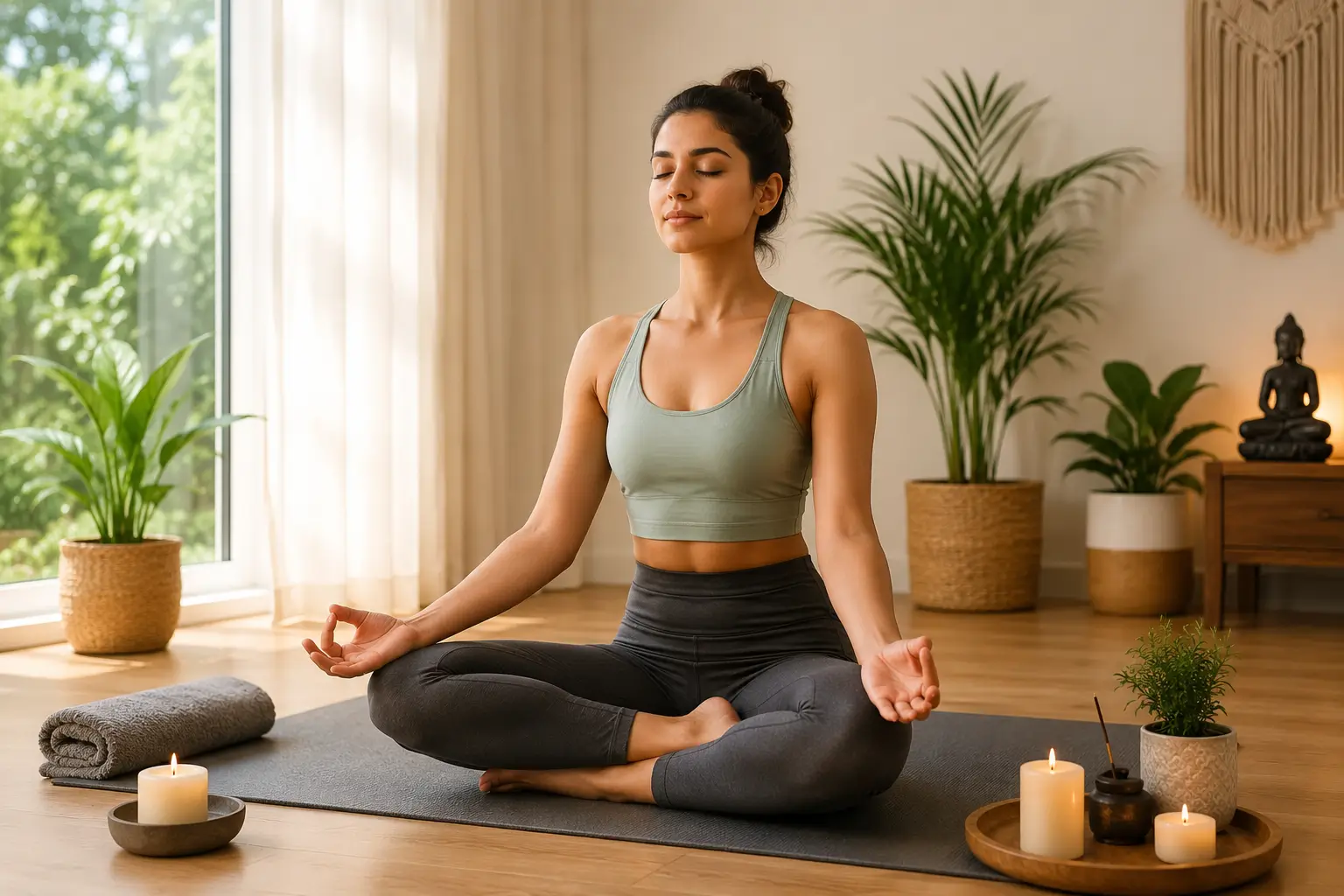
Stress has a funny way of showing up at the worst possible time. You may feel fine in the morning, then a difficult email, traffic jam, work deadline, family issue, or nonstop stream of notifications can leave you tense by afternoon. Your shoulders tighten, your breathing gets shallow, and your mind keeps jumping from one problem to another.
You do not always need a long workout to interrupt that cycle.
Simple yoga techniques can give you a practical way to slow down, move your body, and pay attention to your breathing. Yoga combines physical postures with breathing and, in many practices, mindfulness or meditation. Yoga may reduce stress, according to research, but it shouldn’t take the place of medical care for a recognized anxiety disorder or other mental illness.
You can start with a few gentle movements at home. You do not need to be flexible, own expensive equipment, or spend an hour on a yoga mat.
How Can Yoga Reduce Anxiety and Stress?
Yoga can approach stress from several directions at the same time. Gentle movement can help you release physical tension. Slow breathing gives your attention something specific to focus on. Holding a comfortable posture can encourage you to stop rushing for a moment and notice how your body feels.
That combination matters because stress does not only affect your thoughts. You may also notice a tight jaw, stiff neck, tense shoulders, restless legs, or a racing feeling in your chest. A short yoga session can give you a structured pause. It will not magically remove a difficult situation from your life. But it can help you create a little space between the stressful event and your reaction to it.
Start With Simple Breathing Exercises
You don’t have to start with difficult poses. In fact, if you’re feeling overwhelmed, breathing might be the simplest place to start. Take a comfortable seat on a yoga mat, couch, or chair. Allow your breathing to settle down and become more comfortable as you relax your shoulders.
Try breathing gently through your nose and slowly breathing out. Do not force a huge breath. Instead, focus on making each breath smooth. The NHS recommends a simple breathing practice that involves comfortable breathing into the belly, gentle inhalation through the nose, and slow exhalation. It suggests practicing for at least five minutes when possible.
You can also use breath awareness during yoga. When your mind wanders toward your work, bills, or tomorrow’s schedule, bring your attention back to the next inhale and exhale. That simple action can make your practice feel more calming.
Try Gentle Yoga Poses for Stress Relief
You do not need advanced flexibility to use yoga for relaxation. Some of the most commonly recommended poses for stress relief are gentle and easy to modify. Health organizations and yoga resources commonly include poses such as Child’s Pose, Cat-Cow, Easy Pose, Legs Up the Wall, and Savasana in calming practices.
1. Child’s Pose for a Quiet Reset
Child’s Pose works well when you want to slow everything down. Kneel on your mat and sit your hips toward your heels. Then fold your upper body forward and allow your forehead to move toward the mat. Stretch your arms forward or rest them alongside your body.
If your hips or knees feel uncomfortable, place a folded blanket or pillow under your body for support. You do not need to force the stretch. The goal here is comfort. Stay for several slow breaths and let your shoulders relax. Cleveland Clinic also includes Child’s Pose as a beginner-friendly posture that can help you slow down and reconnect with your breathing.
2. Cat-Cow to Release Tension
Try Cat-Cow if you find it difficult to stay still when under stress. Get on your hands and knees to begin. Move your chest forward gently as you inhale, letting your back curve pleasantly. Bring down your chin closer to your chest and softly curve your spine as you release the breath.
Move slowly rather than trying to make the movement large. Try moving for about a minute and stop if you feel pain.
3. Legs Up the Wall for Deep Relaxation
Legs Up the Wall is a great pose to help you unwind at the end of the day. To do it, sit sideways next to a wall, then gently swing your legs up against the wall as you lie flat on your back. Rest your arms comfortably at your sides.
You can place a folded blanket under your head or hips if that feels more comfortable. The Art of Living lists Legs Up the Wall among yoga poses that can encourage relaxation and stress relief. You do not have to stay in the pose for a long time. A few comfortable minutes may be enough for a short evening routine.
4. Savasana for the Final Reset
Savasana, or Corpse Pose, sounds more complicated than it feels. Simply lie on your back with your arms relaxed and your feet comfortably apart. Close your eyes if that feels safe and comfortable. Let your body settle into the floor.
Now pay attention to your breathing. This pose can feel surprisingly difficult for people who spend their entire day doing something. If your mind keeps producing a to-do list, that is normal. Notice the thought and gently return your attention to your breathing.
Use a Short Yoga Routine When You Feel Stressed
You do not need to create an elaborate yoga schedule. A short sequence can work better for a busy person because you are more likely to repeat it.
Try this simple routine:
- Begin with two minutes of slow breathing. Sit comfortably and focus on your breath. Breathe naturally without forcing it. The goal is simply to pull your mind away from racing thoughts.
- Move through Cat-Cow for about one minute. Let your breath guide how you move. Keep every stretch comfortable, especially if your back or neck feels stiff.
- Rest in Child’s Pose for two to three minutes. Use a blanket or pillow for extra support if you need it. Drop your shoulders and let your breath slow down naturally.
- Finish with Savasana for several minutes. Lie down comfortably and give yourself permission to do nothing for a moment.
This routine takes only a few minutes, yet it gives you movement, breathing, and quiet time in one practice.
Can Yoga Calm Your Mind Quickly?
It can help you feel calmer, but it is important to keep your expectations realistic. You may notice that your body feels less tense after a short session. You may also find it easier to focus on your breathing instead of the stressful thought that occupied your attention.
However, yoga does not guarantee instant relief for everyone.
Research from the National Center for Complementary and Integrative Health suggests that some studies show benefits from yoga for stress management, but results vary, and more research can help clarify how yoga works for different people.
That is why it makes more sense to think of yoga as a useful stress-management habit rather than an instant cure.
Practice Mindfulness While You Move
You can turn almost any gentle yoga session into a mindfulness exercise. You do not need to sit cross-legged with your eyes closed for 30 minutes.
Notice your feet touching the floor. Feel your shoulders moving. Listen to your breathing. Notice where your body feels tight. When your thoughts move toward tomorrow’s meeting or yesterday’s argument, gently return your attention to the movement.
This approach can make a basic yoga session feel much more useful than simply rushing through a list of poses.
Yoga Techniques You Can Use Before Bed
Evening can be a good time for gentle yoga if your day leaves you feeling physically and mentally wound up. You do not need an intense routine before sleeping. Strong or challenging movements may leave you feeling more energized.
Try a few minutes of comfortable breathing, followed by Cat-Cow, Child’s Pose, and Savasana. You can also spend a few quiet minutes in Legs Up the Wall if it feels comfortable for you.
The University of Washington’s restorative yoga guidance emphasizes stillness, relaxation, comfortable positioning, and the use of props such as blankets, bolsters, and blocks when needed.
Think of your evening practice as a transition between “I have things to do” and “my day is winding down.”
How Often Should You Practice Yoga for Stress?
Consistency matters more than trying to do a long session once in a while. You might start with 5 to 10 minutes several days a week. Once the habit feels natural, you can increase the time if you enjoy it.
Cleveland Clinic recommends that beginners move at their own pace and points out that even a short daily practice can work better as a habit than occasional sessions. You can also attach yoga to something you already do.
For example, practice after you brush your teeth at night, after work before dinner, or before you start your weekend morning.
The easier you make the routine, the less likely you are to skip it.
When Should You Get Professional Help?
Yoga can support your overall approach to managing everyday stress, but it should not replace professional care when you need it.
If stress feels overwhelming, continues for a long time, interferes with your daily life, or comes with significant anxiety or other concerning symptoms, talk with a qualified healthcare professional.
The National Center for Complementary and Integrative Health notes that research on yoga for anxiety shows promise, but there is not enough evidence to recommend yoga as the primary treatment for anxiety disorders.
Summary
The most useful yoga techniques for stress do not have to look impressive. You can sit quietly and breathe for a few minutes. You can move slowly through Cat-Cow. You can rest in Child’s Pose after a difficult workday. You can finish with Savasana and give yourself a few minutes without your phone, email, or endless notifications.
That is the real advantage of a simple yoga practice. You can make it fit your life instead of rearranging your entire life around it. Start with five minutes. Keep the movements comfortable. Focus on your breathing. Practice regularly.
You may not eliminate every stressful moment, but you can build a healthier way to pause, reset, and respond when life starts moving too fast.

1 Comment
Pingback: Thoracic Surgery: Expectation, Preparation & Recovery