


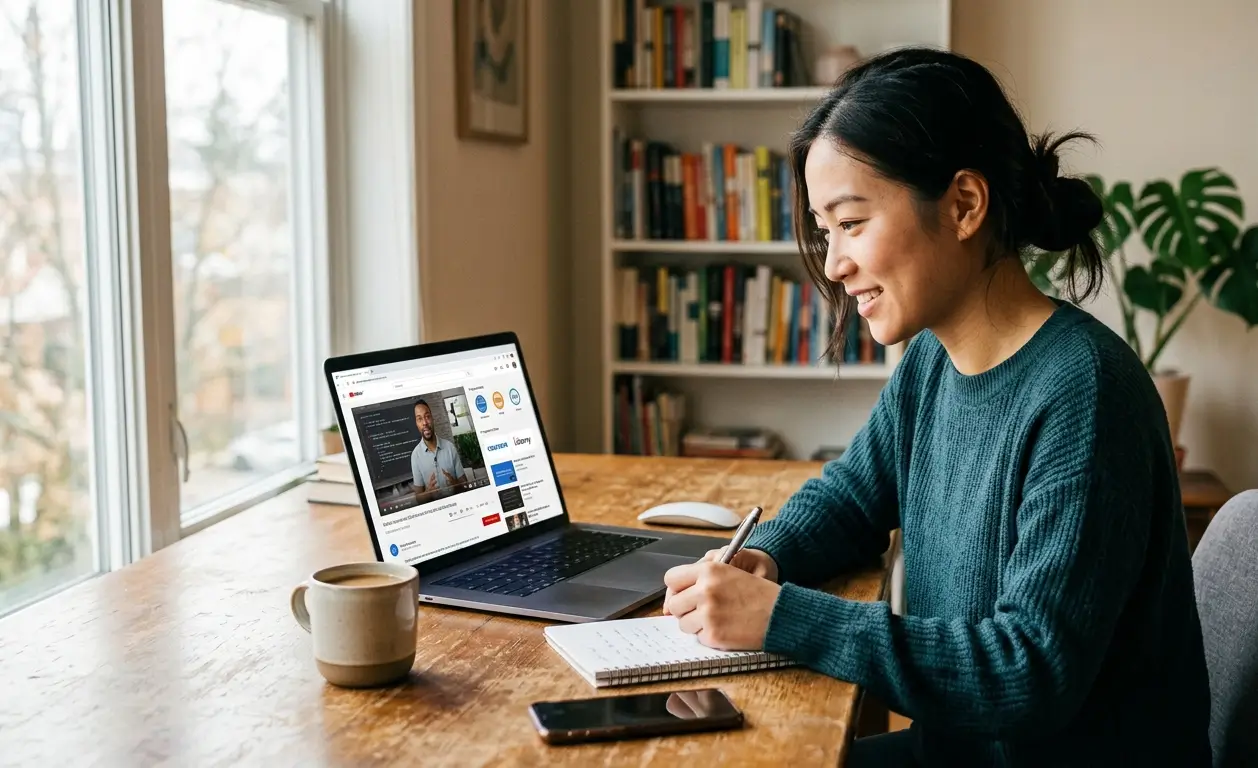
Finding the time and extra budget to level up your career used to mean commuting to a local community college or dropping tens of thousands of dollars on a traditional degree. Times have changed. Today, you can master full-stack software development, learn digital marketing, or pick up graphic design right from your kitchen counter.
Lack of options is not the issue. There are too many options. Selecting the best online learning platforms might soon feel like a full-time job due to the numerous websites that promise to change your resume overnight. You register on one website, discover the material is out of date, or wind up paying a monthly charge for courses you never take.
If you want to build real-world skills without wasting your hard-earned dollars or time, you need a straightforward breakdown. Here is a realistic look at how the top online learning sites stack up, what they do best, and how to pick the right one for your goals.
What to Look for Before You Pay for Online Learning Course
Knowing what you are truly purchasing is helpful before entering your credit card details. Every educational website has a different function. While some are made for short, bite-sized skill upgrades, others are meant to resemble a college lecture.
Reduce your options for online learning based on four simple criteria to prevent buyer’s regret:
- Your primary goal: Do you need an official certificate to put on your resume, or do you just need to learn a quick Excel trick before work on Monday?
- Teaching style: Do you learn best by watching videos, reading guides, or doing projects?
- Pricing structure: Would you rather purchase a single lesson for lifetime access, or would you rather pay a fixed monthly membership to access?
- Instructor credibility: Are the instructors at universities, verified professionals in the field, or self-published authors teaching this material?
Top Online Learning Platforms Compared
1. Coursera: Best for Big Names and Full Career Changes
Coursera is great if you want to learn from top schools like Yale and Stanford or big tech companies like Google.
They teach you everything you need for careers like project management or data analysis, but their courses take many months to finish. The majority of class videos are available for free. You must pay, though, if you want your coursework assessed and require an official certificate for your resume. Remember that you cannot complete these courses in a single afternoon because they require actual time and effort.
2. Udemy: Best for Affordable, Practical Skills Across Every Niche
Udemy is a huge online marketplace where anyone with expertise can create and sell a course. Because of this, they offer hundreds of thousands of classes on almost everything, from basic watercolor painting to advanced computer coding.
The best part about Udemy is the low price and flexible setup. You pay for one course at a time instead of signing up for a monthly subscription. The prices look high at first, but Udemy puts courses on sale all the time for just $15 to $20.
Be sure to check the ratings, read the reviews, and watch a free sample video before you spend your money on online learning.
3. LinkedIn Learning: Best for Working Professionals and Soft Skills
Formerly known as Lynda.com, LinkedIn Learning is built specifically for workplace advancement. The platform focuses heavily on professional skills, software training, management, graphic design, and leadership.
LinkedIn Learning easily connects to your professional profile. When you finish a course, you can add the certificate to your LinkedIn profile with one click.
All classes are taught by real industry experts, and the videos are clear and easy to follow. Lessons are split into short, quick chapters, so you can learn on a lunch break. Best of all, if you already pay for LinkedIn Premium, you get full access to every course for free.
4. edX: Best for Deep Academic Learning and Degree Pathways
If you want a real, challenging college experience in online learning, edX is your best option. Started by Harvard and MIT, it focuses on serious subjects like computer science, engineering, business, and science.
Like Coursera, edX lets you watch classes for free. If you want real college credit, edX offers advanced certificates and online master’s degrees from top schools. The classes are hard, with strict deadlines, tough homework, and big exams. It is not for a quick review, but it is great if you want to master a hard subject.
5. Skillshare: Best for Creatives, Freelancers, and Side Hustlers
Skillshare skips the hard quizzes and focuses on hands-on creative projects instead. It is built for anyone who wants to learn drawing, video editing, writing, photography, or how to run a small freelance business.
Skillshare classes are often brief, interesting, and focused on a practical project rather than lengthy, theoretical lectures. For instance, a class will walk you through creating a real poster or logo from scratch rather than only listening to a lecture about graphic design theory. You can access all of the classes in the platform’s library indefinitely with a monthly or annual subscription. You will leave with concrete work to showcase in your portfolio, even if you won’t receive authorized college diplomas.
How to Stick with Online Learning Without Burning Out
Signing up for an online learning platform is the easy part. The real challenge is actually finishing what you start. Online learning offers complete freedom, but that lack of structure means it is easy to get distracted and drop off after a week or two.
Start by treating your online class like a real, non-negotiable appointment. Block out 30 minutes on your calendar three days a week, rather than trying to pull an exhausting five-hour binge session on Sunday night. Keep your goals small and focused. Instead of telling yourself you are going to master a new career path this month, focus on completing just one single module or assignment.
Put what you learn to work right away. If you take a coding lesson, write a simple line of code that same night. If you watch a video on social media marketing, post something for your small business. Building real projects helps you remember things much better than just sitting back and watching videos. Pick a site that fits your budget and online learning style, start small, and build the habit step by step.
